


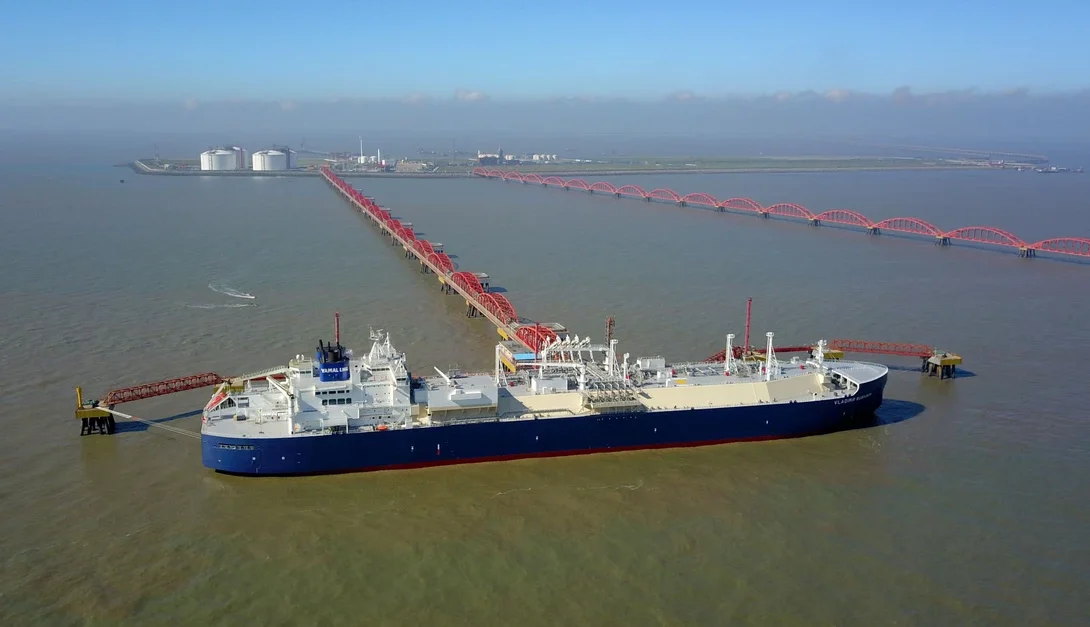
The European Union continues to import significant quantities of Russian liquefied natural gas (LNG) and pipeline gas, despite ongoing efforts to reduce dependency. In 2025, EU countries imported approximately 7.4 billion euros worth of Russian LNG, a slight decrease from 7.6 billion euros in 2024. While this still channels billions to Moscow, it represents a smaller portion of the EU’s total LNG imports, which amounted to around 46 billion euros in 2025, with the United States being the largest supplier at 24.2 billion euros. Unlike swift bans on Russian oil and coal post-invasion, gas sanctions were delayed due to deep-seated dependencies.
However, the landscape is set to change dramatically. The EU has now moved to implement a comprehensive ban on Russian gas imports. A full import prohibition for Russian LNG is slated to take effect by 2027, as part of an extensive sanctions package agreed upon in October. Furthermore, a new regulation came into force earlier this month, mandating a gradual phase-out of all Russian gas imports – both LNG and pipeline gas via routes like Turkstream – by no later than November 1, 2027. This regulation offers a more permanent legal framework compared to the typically six-monthly renewed sanctions, which require unanimous member state approval.
To address potential vulnerabilities, the new regulation includes a crucial safety clause. Should the energy security of one or more member states be severely jeopardized, the European Commission retains the authority to permit affected countries to temporarily suspend these import bans. Such an exemption would only be granted if a member state formally declares a state of emergency. The overarching objective behind these stringent measures is clear: to ensure the EU’s long-term independence from Russian energy supplies, thereby reducing its susceptibility to political leverage and significantly curtailing Moscow’s financial capacity to fund its war of aggression against Ukraine.
The impact of these upcoming bans is already being felt, with entities like the German state-owned energy company Sefe (formerly Gazprom Germania) directly affected due to existing long-term contracts for Russian LNG. Despite concerns, the European Commission has expressed confidence that consumers should not face significant risks. An analysis by the EU authority suggests that the phasing out of remaining Russian gas volumes can be managed without compromising supply security, citing the robust global gas market and the availability of alternative providers. This strategic shift underscores the EU’s firm commitment to decoupling from Russian energy.