


Reports suggest former President Donald Trump could significantly influence the resolution of the ongoing conflict involving Israel, with indications that Israel would be compelled to adhere to his decisions regarding the war’s conclusion. This speculation arises amidst persistent discussions about the future of Middle East diplomacy and the role of international mediation. A potential second Trump administration would likely bring a distinct approach to the complex regional dynamics, potentially reasserting a more unilateral American stance on critical geopolitical issues. This shift could have profound implications for Israel’s strategic autonomy and its relationships with global powers.
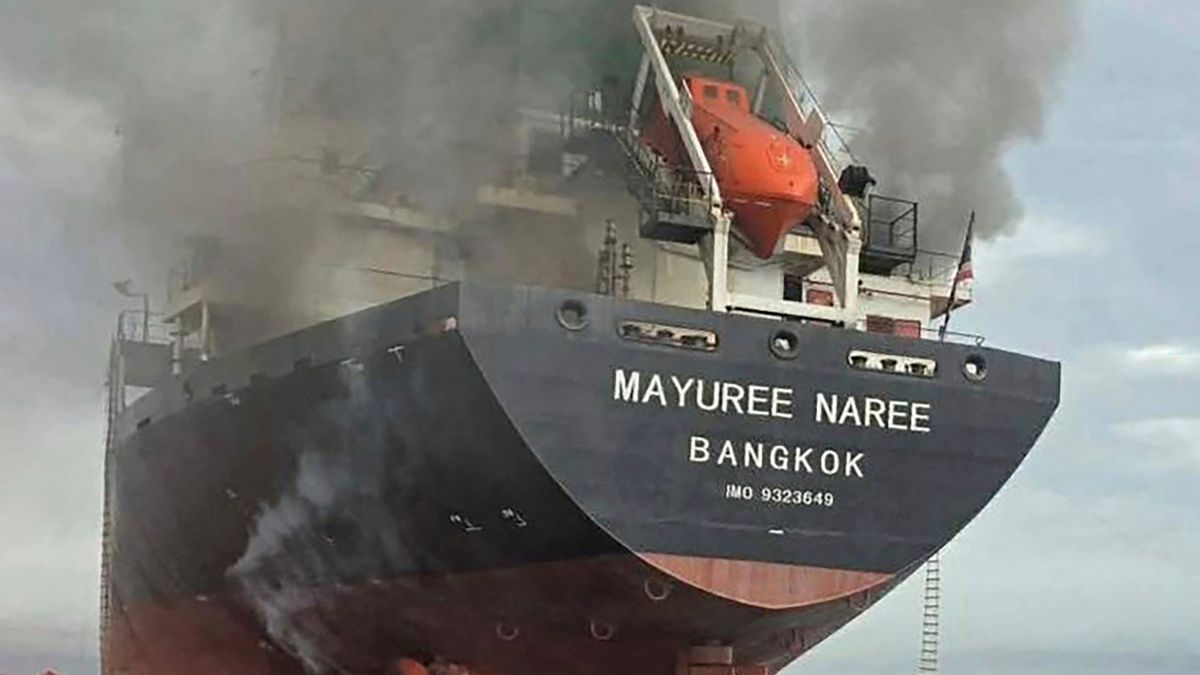
Adding to the volatile situation in the region, a recent incident involved a burning ship near the crucial Strait of Hormuz, reportedly following an Iranian attack. The Strait of Hormuz is a vital chokepoint for global oil shipments, and any disruption or aggression in this area immediately raises international alarm due to its economic and strategic importance. Such attacks underscore the ongoing tensions between Iran and various regional and international actors, perpetuating concerns about maritime security and freedom of navigation in critical waterways.
Intriguingly, the response to the burning ship incident near the Strait of Hormuz has been characterized by a decision to “ignore” the attack. This reported lack of immediate or overt international condemnation or action is noteworthy and could signal a deeper geopolitical calculus at play. Whether this indicates a deliberate de-escalation strategy, a shift in priorities, or an assessment of the incident’s broader implications remains to be seen. The absence of a robust public reaction stands in stark contrast to past incidents in the region, prompting questions about the evolving norms of engagement and deterrence in the Middle East.
These two distinct yet intertwined developments – the projected influence of a potential Trump administration on Israel’s conflict resolution and the muted response to an alleged Iranian attack on a commercial vessel – paint a complex picture of the Middle East’s geopolitical future. They suggest a period of significant flux where traditional alliances and diplomatic norms might be redefined. The interplay between strong leadership in Washington regarding regional conflicts and the observed international response to provocative actions could shape the stability and security of one of the world’s most critical regions for years to come, with potential ramifications for global trade and security.
