


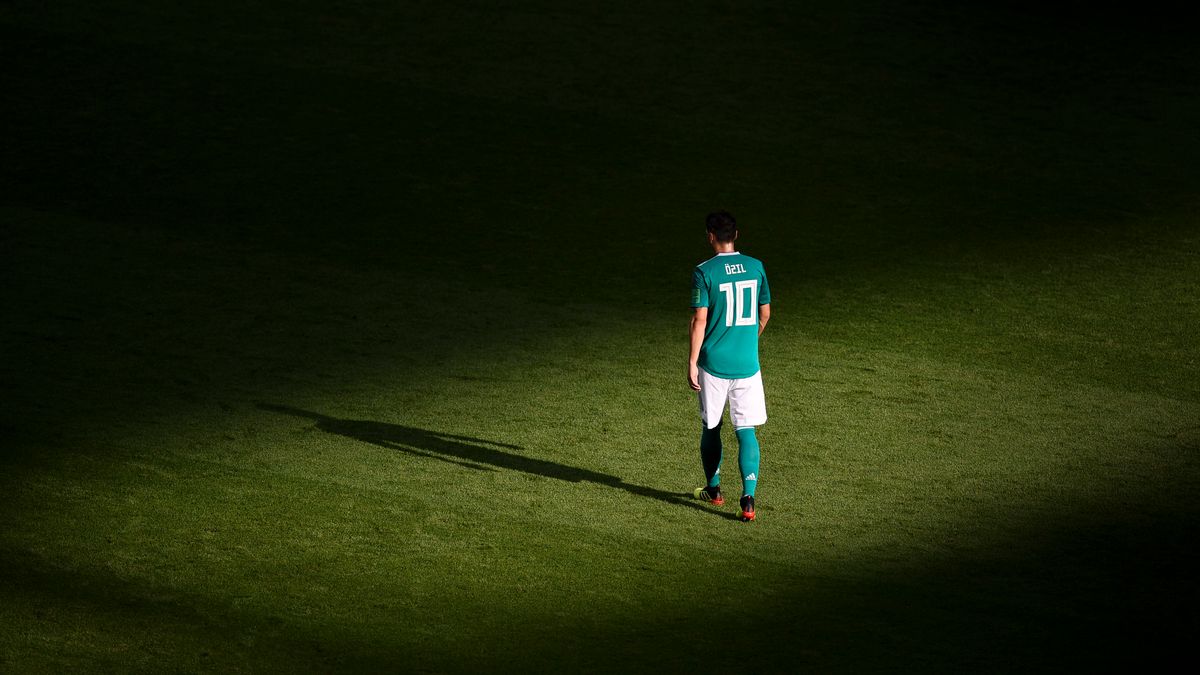
Mesut Özil, one of Germany’s most gifted footballers, often found himself at the epicenter of public debate, particularly after his final appearance for the German national team. A significant focus point for this intense scrutiny was a ZDF television documentary that sought to dissect his complex role. This production aimed to go beyond superficial narratives, presenting Özil not merely as a wronged individual, but as a figure who simultaneously embodied the roles of both victim and perpetrator within the contentious events leading up to and following his departure from the DFB. The documentary’s approach was to provide a nuanced perspective, challenging simplistic black-and-white interpretations of his career and public image.
As a victim, Özil faced immense pressure and criticism, much of which stemmed from his heritage and a photograph with Turkish President Recep Tayyip Erdoğan. This image sparked a furious debate about loyalty, integration, and political symbolism, placing an undue burden on an athlete whose primary focus was football. He was often perceived as a scapegoat for the national team’s poor performance at the 2018 World Cup, subjected to racist remarks and prejudiced assumptions that overshadowed his sporting achievements and contributions to German football. The documentary likely explored how these external pressures and discriminatory experiences deeply affected him, leading to his emotional and controversial retirement statement, which highlighted feelings of being disrespected and misunderstood.
Conversely, the documentary also posited Özil as a perpetrator, or at least an active agent in the unfolding drama. This perspective acknowledges that his actions, decisions, and public silence, particularly regarding the Erdoğan photo, contributed to the escalation of the controversy. His perceived lack of clarification or active engagement in the ensuing public discourse left room for interpretation and fueled further speculation. By not fully addressing the political implications of his actions in a way that satisfied German public opinion or the DFB, he inadvertently solidified a narrative that painted him as detached or even defiant. This aspect of the documentary likely examined how his choices, whether intentional or not, impacted the team’s cohesion, the DFB’s image, and the broader discussion about sports and politics in Germany.
The ZDF documentary, by framing Mesut Özil as both victim and perpetrator, aimed to provoke a deeper reflection on the complexities of modern professional football, media scrutiny, and the challenges faced by athletes with migration backgrounds. It underscored that public figures, especially those in high-profile sports, often navigate a minefield of expectations, identity politics, and national narratives. The dual labeling suggests that responsibility and blame are rarely unilateral, emphasizing the multifaceted nature of the Özil saga. This analytical approach encourages viewers to move beyond simple judgments, fostering a more critical understanding of the intricate interplay between individual actions, societal pressures, and systemic issues that defined one of German football’s most polarizing figures.
