


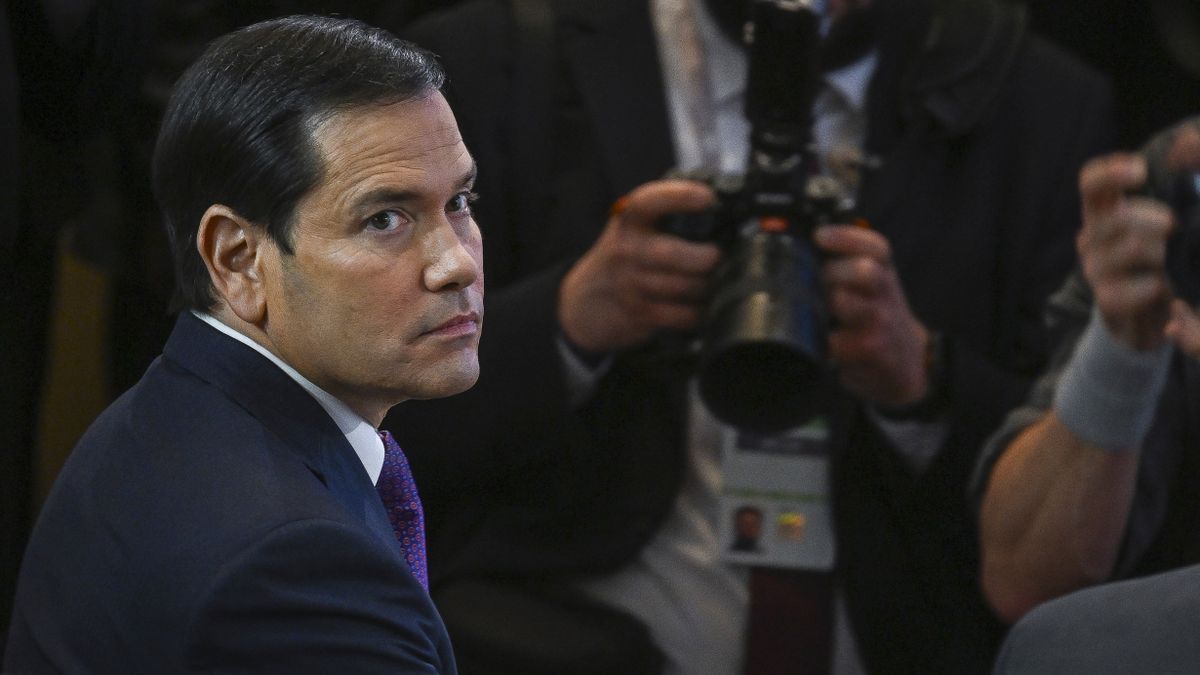
Senator Marco Rubio’s appearance at the Munich Security Conference captivated attendees, presenting a cordial and accessible demeanor despite advocating for positions deeply aligned with former President Donald Trump’s “America First” foreign policy. His visit was keenly observed by European allies eager to gauge the future direction of U.S. engagement on the global stage, especially amid speculation about Trump’s potential return to the White House. Rubio, a prominent Republican voice, navigated complex geopolitical discussions with a tone that was consistently described as engaging and professional, yet his underlying message underscored a potential shift in transatlantic priorities.
The core of Rubio’s message in Munich revolved around the principles that defined the Trump administration’s approach to international relations: a robust emphasis on national sovereignty, transactional alliances, and a reassessment of traditional multilateral frameworks. While not explicitly echoing Trump’s more confrontational rhetoric, Rubio articulated a vision where U.S. interests would take paramount precedence, potentially leading to a recalibration of burden-sharing within NATO and other international organizations. This stance inevitably prompted questions among European leaders regarding the reliability of long-standing alliances and the future of collective security.
Rubio’s presence undoubtedly served as “the elephant in the room” for many European officials, symbolizing the looming possibility of a second Trump presidency and the profound implications it would have for global governance and stability. His discussions, while ostensibly about current policy, were largely interpreted through the lens of a potential future where Trump’s agenda could once again dominate U.S. foreign policy. This created an atmosphere of cautious engagement, where diplomatic niceties were exchanged, but underlying anxieties about predictability and solidarity remained palpable among attendees trying to decipher the true intent behind the U.S. political landscape.
Ultimately, Senator Rubio’s visit to the Munich Security Conference underscored a critical juncture in transatlantic relations. It highlighted the ongoing effort by Republicans aligned with Trump to prepare international partners for a potential paradigm shift in U.S. foreign policy, one that prioritizes national interests and strategic autonomy. The conference became a forum not just for discussing contemporary security challenges, but for subtly signaling the direction a future Republican administration might take, leaving European capitals to ponder strategies for adapting to a potentially less predictable and more demanding American partner.