


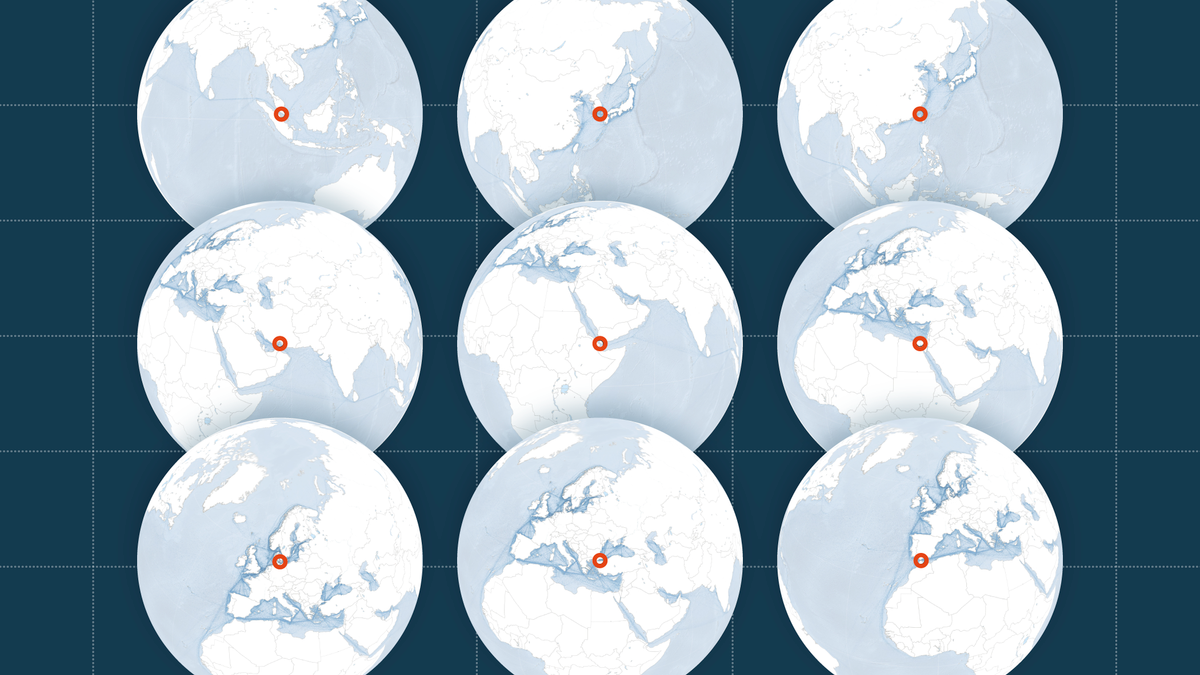
The Strait of Hormuz, a narrow waterway connecting the Persian Gulf with the Arabian Sea, stands as the world’s most critical chokepoint for oil transit. An estimated one-fifth of global petroleum liquids consumption, roughly 21 million barrels per day (bpd), passed through this strait in 2023. This includes crude oil, condensate, and petroleum products from major producers like Saudi Arabia, Iraq, UAE, Kuwait, and Qatar. Its strategic importance extends beyond oil to a substantial portion of the world’s liquefied natural gas (LNG) shipments, particularly from Qatar, the world’s second-largest LNG exporter. Any disruption in this vital passage sends immediate shockwaves through international energy markets, impacting prices, supply stability, and global economic forecasts.
Positioned along the northern coast of the Strait, Iran holds significant geographical leverage over this maritime artery. Throughout history, Tehran has, at various times, threatened to close or disrupt shipping in the Strait in response to international sanctions or perceived hostile actions. While such threats are often seen as rhetorical, the sheer capacity for disruption, even partial, highlights Iran’s pivotal role in global energy security calculations. The presence of Iran’s Revolutionary Guard Corps (IRGC) naval forces in the region, coupled with its advanced missile capabilities, underscores the potential for rapid escalation in a highly sensitive geopolitical environment, keeping international observers and energy traders on edge.
The vulnerability of the Strait of Hormuz directly translates into volatility for global energy markets. Even perceived threats or minor incidents in the area can trigger sharp increases in crude oil prices, as traders factor in potential supply disruptions. Major importing nations, particularly in Asia (China, India, Japan, South Korea), are heavily reliant on oil and gas flows through the Strait, making their economies highly susceptible to instability. While some countries maintain strategic petroleum reserves, and limited alternative pipelines exist (e.g., Saudi Arabia’s East-West Pipeline), these cannot fully compensate for a sustained closure or significant impediment to traffic in Hormuz, underscoring the lack of robust bypass options.
The future of the Strait of Hormuz’s role in energy markets remains intrinsically linked to regional stability, international diplomacy, and the evolving relationship between Iran and global powers. Persistent geopolitical tensions, including nuclear negotiations, sanctions regimes, and proxy conflicts in the broader Middle East, continue to cast a long shadow over the Strait. Ensuring the uninterrupted flow of energy through this passage requires constant diplomatic engagement, de-escalation efforts, and robust international maritime security initiatives. As the world transitions to cleaner energy, the Strait’s immediate importance for fossil fuels persists, making its secure passage a paramount concern for global energy security for the foreseeable future.