


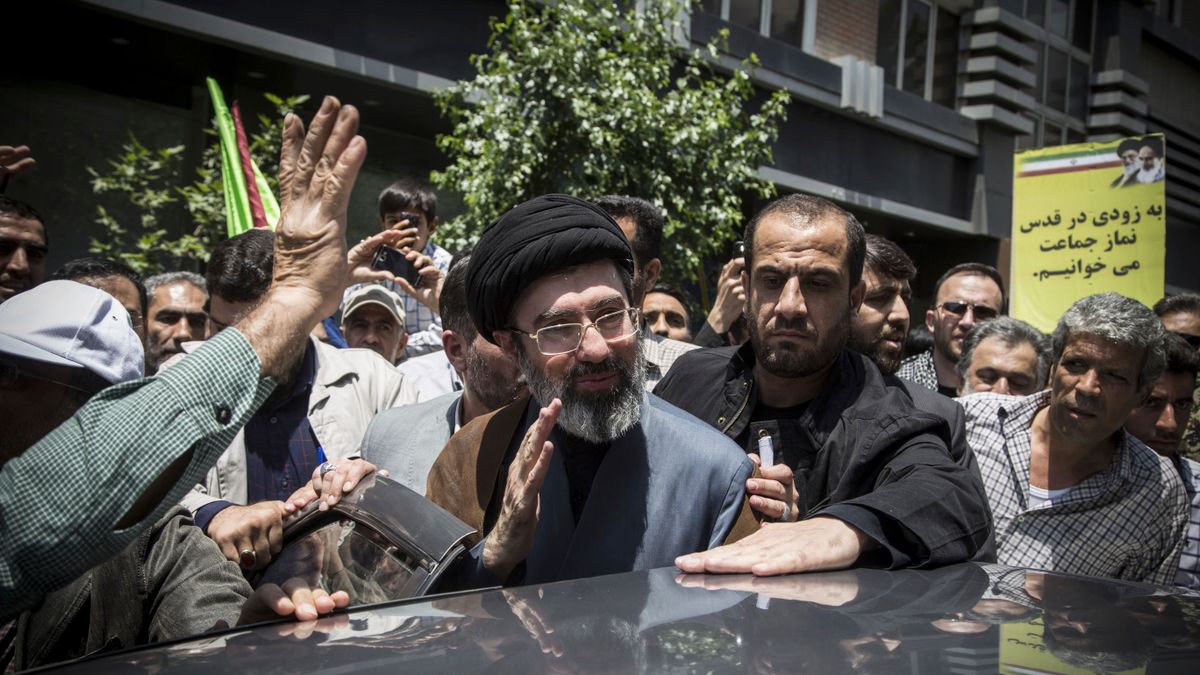
Mojtaba Khamenei, a son of Iran’s Supreme Leader Ayatollah Ali Khamenei, has increasingly come into focus as a potential successor, signaling critical shifts within the Islamic Republic’s leadership. Speculation intensified following public appearances, such as the 2019 Tehran parade, where he was observed amidst key figures. This has led analysts to scrutinize the formation of a distinct “power circle” around him, indicating a deliberate strategy by the regime’s surviving top echelons to manage the impending leadership transition and ensure the continuity of the current political system. His proximity to his father and alleged influence within crucial state apparatuses, including the Revolutionary Guard Corps and the Basij militia, positions him as a formidable, if not controversial, candidate. The dynamics surrounding Mojtaba are not merely about an individual but reflect the broader struggle for control and ideological direction in post-Khamenei Iran.
The formation of this power circle around Mojtaba Khamenei underscores a fundamental desire within Iran’s entrenched leadership for stability and the preservation of the revolutionary ideals, albeit under new stewardship. The term “Machtzirkel” (power circle) implies a tightly-knit group of influential individuals—religious figures, military commanders, and political elites—who align with Mojtaba and potentially stand to benefit from his ascension. Their collective goal is to minimize disruption during a potentially volatile succession period, ensuring that the existing power structures and ideological framework remain intact. This strategy aims to project an image of unity and strength, both domestically to preempt dissent and internationally to deter external interference or challenges to the regime’s legitimacy. The meticulous orchestration of his public profile and the backing he receives from various factions highlight the deep-seated preparations for the post-Ali Khamenei era.
The 2019 parade in Tehran, where Mojtaba Khamenei was prominently featured, served as a crucial symbolic moment, a deliberate public display of his influence and acceptance among the regime’s heavyweights. Such events are carefully managed to convey specific messages, and his presence signaled a tacit endorsement from parts of the establishment. This public showcasing is vital in a political system where legitimacy is often derived from visibility and association with the revolutionary lineage. It demonstrates a conscious effort by the “überlebenden Regimespitzen” (surviving regime leaders) to align themselves with a chosen path of succession, effectively consolidating support around Mojtaba. The overarching objective is to demonstrate that despite internal challenges and external pressures, the regime is capable of a smooth and controlled transition, maintaining its grip on power and direction.
The implications of Mojtaba Khamenei’s rising profile and the consolidation of a power circle around him are profound for Iran’s future trajectory. While the formal process of electing a new Supreme Leader rests with the Assembly of Experts, the behind-the-scenes machinations and the cultivation of influential support are crucial determinants. The focus on continuity suggests a preference for a successor who can uphold the existing system without significant deviation, rather than introducing radical reforms. International observers will closely watch these developments, as Iran’s leadership succession will undoubtedly impact its foreign policy, regional role, and nuclear ambitions. The desire for continuity, therefore, is a strategic imperative for the regime, shaping not just who leads, but how Iran continues to operate on the global stage, with Mojtaba Khamenei emerging as a central figure in this high-stakes political drama.
