


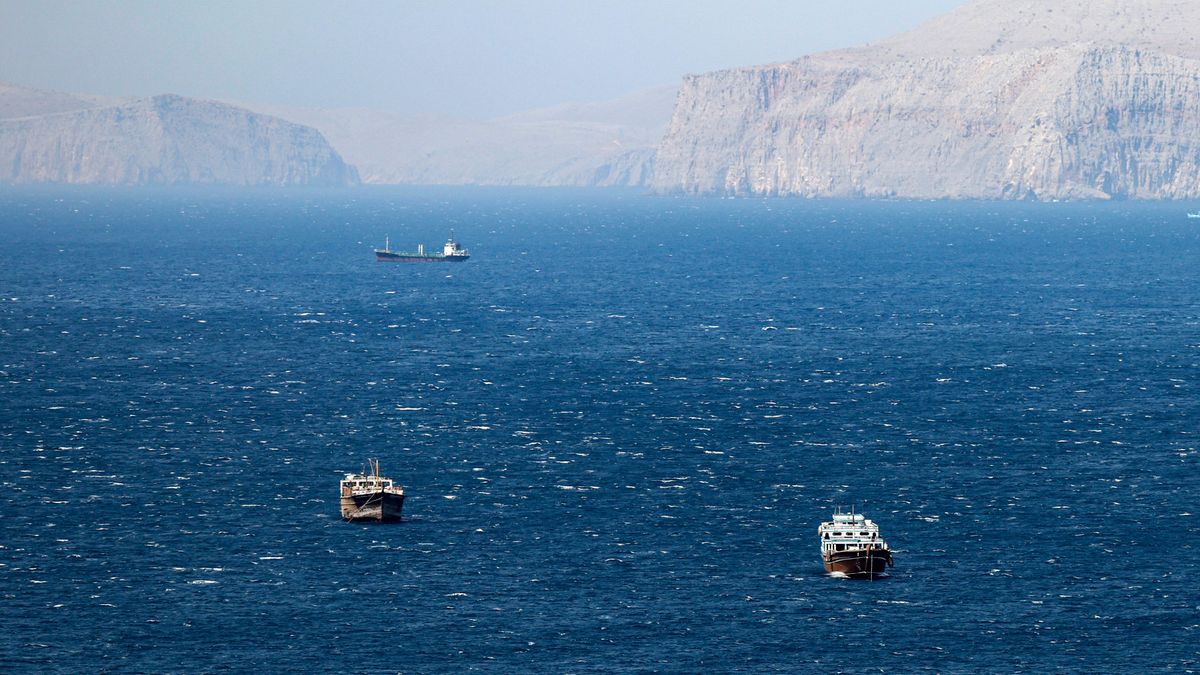
The US operation “Epic Fury” continues with intense military actions against Iran, while Tehran has responded by effectively closing the Strait of Hormuz, threatening vessels and causing a significant backlog of oil tankers. In a decisive move, US President Donald Trump announced that the US Navy would, if necessary, provide escort to these stranded oil tankers through the critical waterway. Writing on Truth Social, Trump emphasized the need for swift action. Additionally, he has instructed the state development bank DFC to offer comprehensive insurance and guarantees for all shipping traffic in the Gulf region, aiming to stabilize maritime trade, including vital oil tanker operations. This strategic response addresses the escalating economic pressure and the profound unrest caused in global energy markets by the conflict and direct threats to shipping.
The Strait of Hormuz, a narrow passage connecting the Persian Gulf to international waters, is one of the world’s most vital maritime trade routes. It serves as the sole outlet for major oil-producing nations like Saudi Arabia, Iraq, Kuwait, Qatar, and Iran itself. Following US-Israeli attacks on Iran, the Iranian Revolutionary Guards declared the strait closed, with explicit threats of attacking passing ships – a threat already materialized in several reported incidents. In 2024, approximately 20 million barrels of crude oil, nearly 20 percent of global consumption, and a fifth of the world’s liquefied natural gas (LNG) transited this strait daily. The ongoing blockade and threats have predictably triggered a sharp and immediate increase in global oil and gas prices, reflecting profound supply concerns.
The escalating conflict and direct threats to shipping in Hormuz have severely rattled energy markets. On Tuesday, Brent crude briefly hit $85.54 per barrel, its highest since July 2024, settling around $80.26 – a substantial increase from pre-conflict levels. US WTI also climbed over three percent to $73.45. The situation remains highly tense for oil supplies; Iraq, a major producer, faces potential cuts of over three million barrels per day if the strait remains impassable, with production already reduced in key fields due to critically high storage levels. This highlights the immediate and tangible impact on global crude availability and pricing.
The surge in gas prices has been equally dramatic, with April delivery reaching nearly 66 Euros per megawatt-hour on Tuesday, a three-year high, almost doubling from pre-conflict levels. With 20 percent of global LNG, primarily from Qatar, transported via Hormuz, Asian buyers are now actively seeking alternative supplies, consequently driving up European gas prices. The International Monetary Fund (IWF) warns that the conflict’s duration will largely determine its impact on global inflation and growth, making any precise forecast premature. This energy shock is particularly severe for Germany, where wholesale gas prices have doubled, prompting the reactivation of a crisis management team from 2022 to mitigate the economic fallout.
