


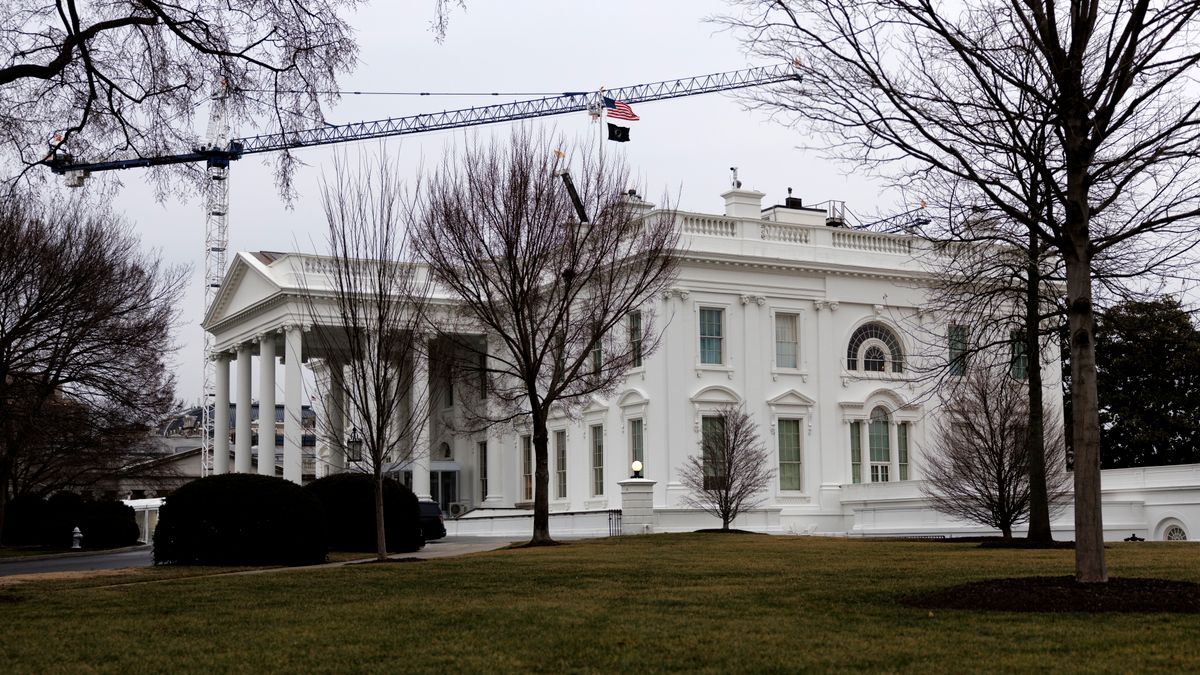
The US government, under President Donald Trump’s administration, is planning a significant upgrade to the White House visitor experience with a proposed underground visitor center. This ambitious project, slated for construction beneath Sherman Park in Washington D.C., is designed to streamline security procedures for all guests and is a key component of Trump’s broader renovation plans for the presidential compound. Spanning approximately 3000 square meters, the facility aims to centralize visitor processing, addressing long-standing logistical challenges associated with public access to the historic site. Its strategic location, southeast of the White House and directly south of the U.S. Treasury Department building, places it at a historically significant entry point for tourists.
Sherman Park has long served as a crucial staging area where tourists would queue for security screenings before being directed through temporary checkpoints to the East Wing entrance. However, the dynamics shifted last autumn when Trump initiated the demolition of the East Wing to make way for a new ballroom, a move that currently sees visitor lines forming near Lafayette Square, across Pennsylvania Avenue. The new underground center is engineered to dramatically improve efficiency, boasting seven state-of-the-art control lanes intended to significantly reduce waiting times for visitors. Construction is ambitiously projected to commence as early as August, with the White House targeting an operational launch by July 2028, strategically set approximately six months before the conclusion of Trump’s potential second term.
The monument honoring Civil War General William Tecumseh Sherman, prominently located in the center of the park, is assured to remain untouched by the construction. This major undertaking involves close collaboration among several key governmental bodies: the Executive Office of the President, the United States Secret Service, and the National Park Service, which is responsible for managing the extensive grounds surrounding the White House. The National Capital Planning Commission is scheduled to deliberate on this proposal during its April 2 meeting. The agenda for this session will also include the final vote on another substantial construction project: an almost 8,500 square meter building with a grand ballroom, destined to rise on the very site of the former East Wing.
Since assuming office, President Trump has implemented several symbolic and structural alterations to the White House complex. Media reports highlight changes such as the paving of sections of the lawn in the historic Rose Garden, which he has reportedly rebranded as the “Rose Garden Club,” now utilized for various social events and gatherings. Inside the executive residence, numerous rooms have also undergone significant redesigns. These interior transformations feature opulent golden embellishments, elegant marble elements, and the installation of new chandeliers within the iconic Oval Office and its adjacent administrative areas, reflecting a distinctive stylistic vision for the nation’s most famous address.
