


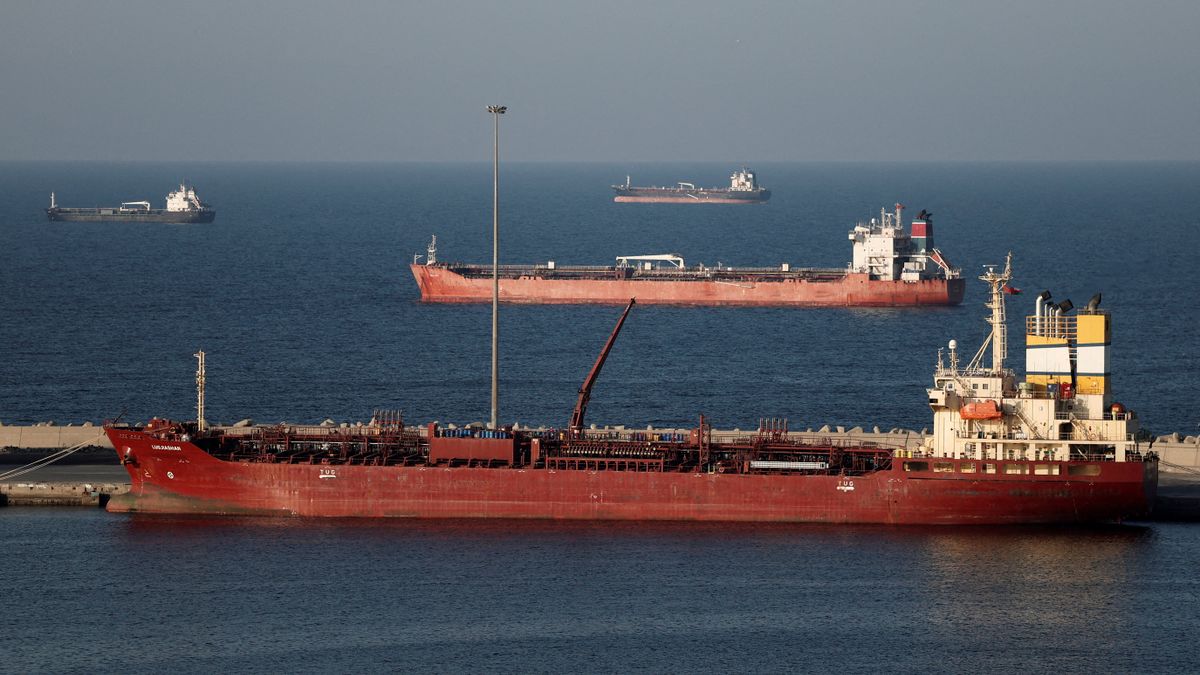
Former U.S. General Clint Hinote has offered a stark assessment of the ongoing tensions surrounding Iran, asserting that the only viable path out of the current crisis hinges on a crucial recognition by the Iranian leadership. Speaking from the context of recent events, including those involving tankers near Muscat, Hinote underscored a fundamental power imbalance. His perspective highlights that Tehran’s awareness of its significant military inferiority compared to the United States is not just an observation but, in his view, the essential leverage for de-escalation and finding a resolution to the protracted standoff. This viewpoint challenges conventional diplomatic approaches by emphasizing the hard realities of military strength as a primary factor in influencing geopolitical outcomes in the region.
Hinote’s analysis delves into the strategic implications of this pronounced military asymmetry. He suggests that while Iran possesses considerable regional influence and conventional capabilities, particularly in asymmetric warfare tactics and its missile program, these do not equate to a capacity to engage in a direct, protracted conflict with the United States on an even footing. The former general’s remarks imply that any aggressive posturing or escalation from Iran is ultimately constrained by this overarching military reality. He posits that Iranian strategists are acutely aware that a direct confrontation would result in overwhelming defeat, a calculation that should, in theory, guide their actions towards a less confrontational path. This understanding forms the bedrock of his proposed “only way out” from the current precarious situation.
According to General Hinote, the single effective avenue for resolving the Iran crisis lies in Tehran internalizing and acting upon its knowledge of military disparity. This means moving beyond rhetoric and engaging in substantive de-escalation and diplomatic efforts, knowing that a military solution on their terms is not feasible. His argument implies that if Iran genuinely recognizes its limited options in a military contest, it would be compelled to seek non-military avenues for addressing its grievances and securing its interests. This could manifest in a renewed willingness to negotiate, adherence to international norms, or a reduction in activities perceived as destabilizing by the international community. The general’s statement suggests that true resolution requires a pragmatic acceptance of power dynamics rather than an ideological confrontation.
The backdrop for these critical observations often includes incidents like the recent tanker situations near Muscat, which serve as flashpoints and indicators of the fragile regional security environment. Such events continually test the resolve of all parties and underscore the potential for rapid escalation. General Hinote’s comments, therefore, come at a time when international calls for de-escalation are paramount. His insights offer a specific framework for understanding the potential motivations and constraints on Iranian decision-making. By focusing on the inherent military imbalance, Hinote provides a perspective that could guide policymakers in devising strategies that acknowledge this fundamental truth, aiming to steer the region away from armed conflict and towards a more stable, albeit challenging, diplomatic future.
