


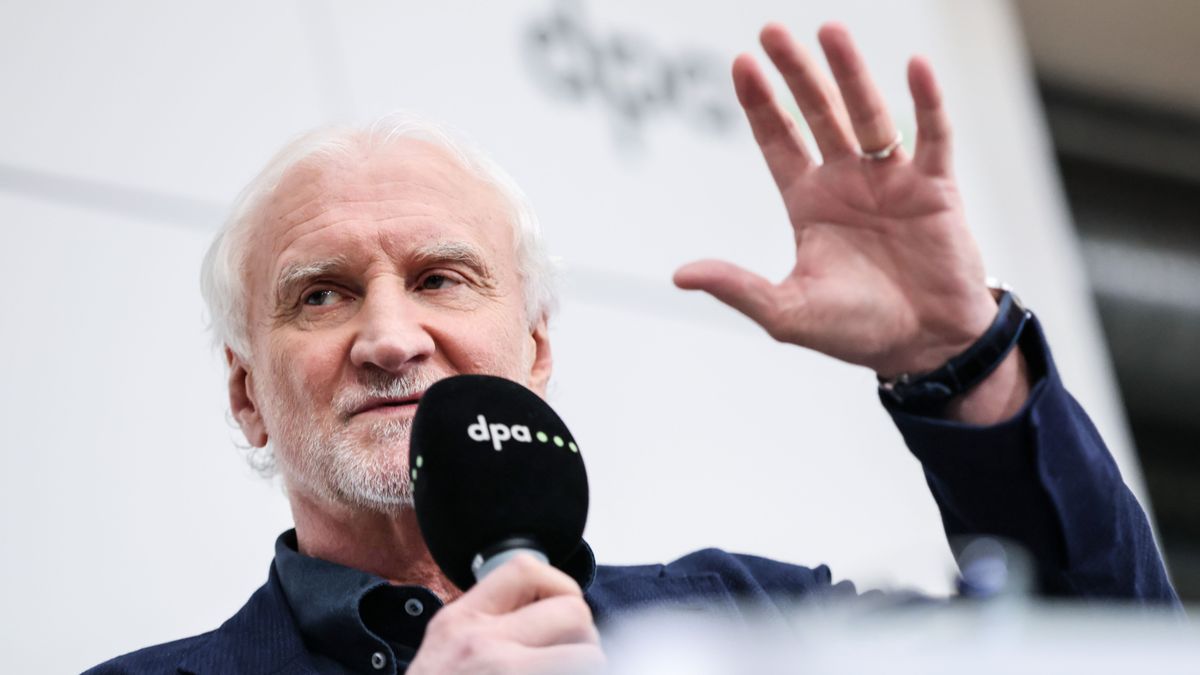
Rudi Völler, DFB-Sportdirektor, has voiced “erschreckend” concerns over the escalating unrest in Mexico, a co-host of the upcoming FIFA World Cup. With the tournament set to begin on June 11, the sudden surge in violence casts a shadow over the preparations. Völler expressed hope that the situation would de-escalate in the coming weeks, allowing for a safe and successful event. The DFB official’s comments underscore the growing international apprehension regarding the safety of participants and spectators alike, just months before the global football spectacle. His remarks came during the Chefredaktionskonferenz of the Deutsche Presse-Agentur (dpa) in Berlin, highlighting the gravity of the situation as perceived by top footballing figures.
The current wave of violence is directly linked to the killing of notorious drug lord Nemesio Oseguera Cervantes, known as “El Mencho,” by the Mexican military. In retaliation, members of his cartel have unleashed extreme acts of violence across the country. Numerous incidents include the torching of gas stations, shops, cars, and banks, alongside the erection of street blockades. While official figures are yet to be released, reports indicate multiple fatalities and injuries. This drastic escalation prompted several nations, including Germany, to issue travel warnings, urging their citizens in Mexico to exercise utmost caution and remain vigilant amidst the turmoil.
The federal state of Jalisco, on Mexico’s west coast, has been particularly affected, especially its capital, Guadalajara. This city is not only home to one of Mexico’s three World Cup stadiums but is also slated to host the training camps for teams like Colombia and South Korea. Guadalajara is scheduled for four preliminary round matches, including a high-profile clash between European champions Spain and Uruguay. Beyond Jalisco, Mexico City and Monterrey are the other two Mexican host cities, where a total of 13 matches will take place. Uruguay and potentially South Africa have also planned their World Cup quarters in Mexico. Furthermore, Guadalajara and Monterrey are set to host international playoff matches in late March and early April to determine the final two World Cup participants, adding to the immediate concern. The FIFA’s silence on the dpa inquiry further highlights the uncertainty.
The widespread unrest has already led to tangible disruptions within the football calendar. On Sunday, two first-division games in Mexico were cancelled due to the security situation. Doubts now loom over a planned friendly match between the Mexican national team and Iceland, scheduled for this week in Queretaro, a city strategically located between Guadalajara and Mexico City. The potential for further cancellations and the broader implications for pre-tournament events and infrastructure security remain a major concern. The international community, football federations, and fans are closely watching developments, hoping for a swift resolution to ensure the safety and integrity of the 2026 World Cup in Mexico. The overarching question remains how quickly stability can be restored before the global spotlight turns to Mexico.