


Slovakia’s Premier Robert Fico has reportedly initiated a controversial move, cutting off electricity supply to Ukraine. This decision, emerging amidst the ongoing conflict, takes on particular significance due to its timing. It is understood to have occurred precisely on the anniversary of Russia’s full-scale invasion of Ukraine, a date laden with symbolic weight and international attention. This action by the Slovak government raises immediate questions about its implications for Ukraine’s energy security, especially during a period when its infrastructure is under constant threat. The symbolic gesture is likely to be interpreted differently across the European political landscape, particularly by Kyiv and its Western allies, who have consistently emphasized solidarity with Ukraine.
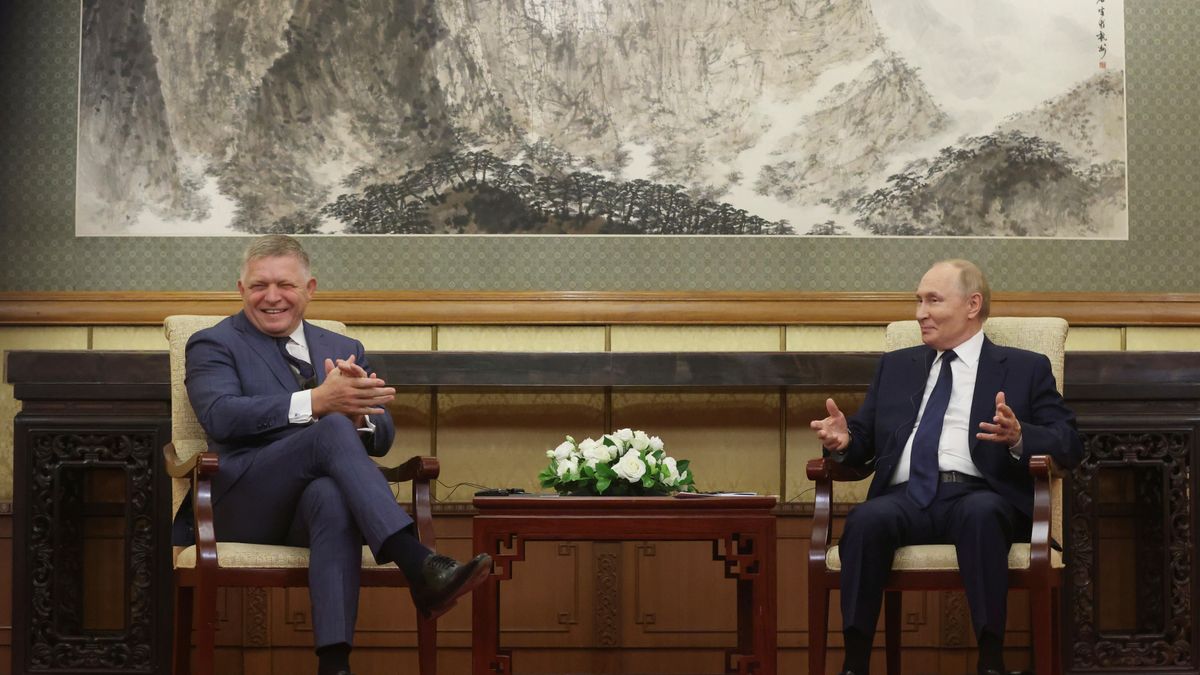
Premier Fico’s administration has previously signaled a shift in Slovakia’s foreign policy orientation, moving towards a more pragmatic or, as some critics suggest, a more pro-Russian stance since his return to power. His recent actions, including this reported electricity cut, appear consistent with a broader strategy that prioritizes national interests as perceived by his government, even if it diverges sharply from the consensus among many EU and NATO members. A notable aspect of this shift was his meeting with Russian President Vladimir Putin in Beijing in September. During that encounter, Fico is reported to have expressed the sentiment that “one must arrange things” or “come to terms” with Russia, suggesting a willingness to seek accommodation rather than confrontation. This perspective stands in stark contrast to the firm condemnation and sanctions adopted by the majority of Western nations against Russia.
The move is expected to draw considerable international scrutiny and could strain Slovakia’s relationships with key allies, particularly those within the European Union and NATO who have been steadfast in their support for Ukraine. Such an action by an EU member state, directly impacting Ukraine’s vital infrastructure, might be seen as undermining collective efforts to bolster Ukraine’s resilience against Russian aggression. It could also fuel accusations of weakening European unity at a critical juncture. The humanitarian implications for Ukraine, already grappling with widespread power outages caused by Russian attacks, are also a serious concern. Fico’s government will likely face pressure to clarify its motives and the extent of any such energy disruption.
This development underscores the complex interplay of energy politics and geopolitical alignments in Central Europe. Energy supply has increasingly become a tool in international relations, and Fico’s alleged decision highlights the divergent approaches within the European bloc concerning the conflict in Ukraine. While many European nations have sought to diversify their energy sources away from Russia and to actively support Ukraine’s energy grid, Slovakia’s move could signal a potential vulnerability or a deliberate strategic choice to re-evaluate its position. The “one must arrange things” philosophy espoused by Fico, particularly in the context of energy, suggests a readiness to navigate the geopolitical landscape with an eye towards what he perceives as Slovakia’s immediate benefits, even if it means departing from collective Western solidarity. This incident could therefore serve as a critical test case for internal EU cohesion and its unified stance against Russian aggression.
