


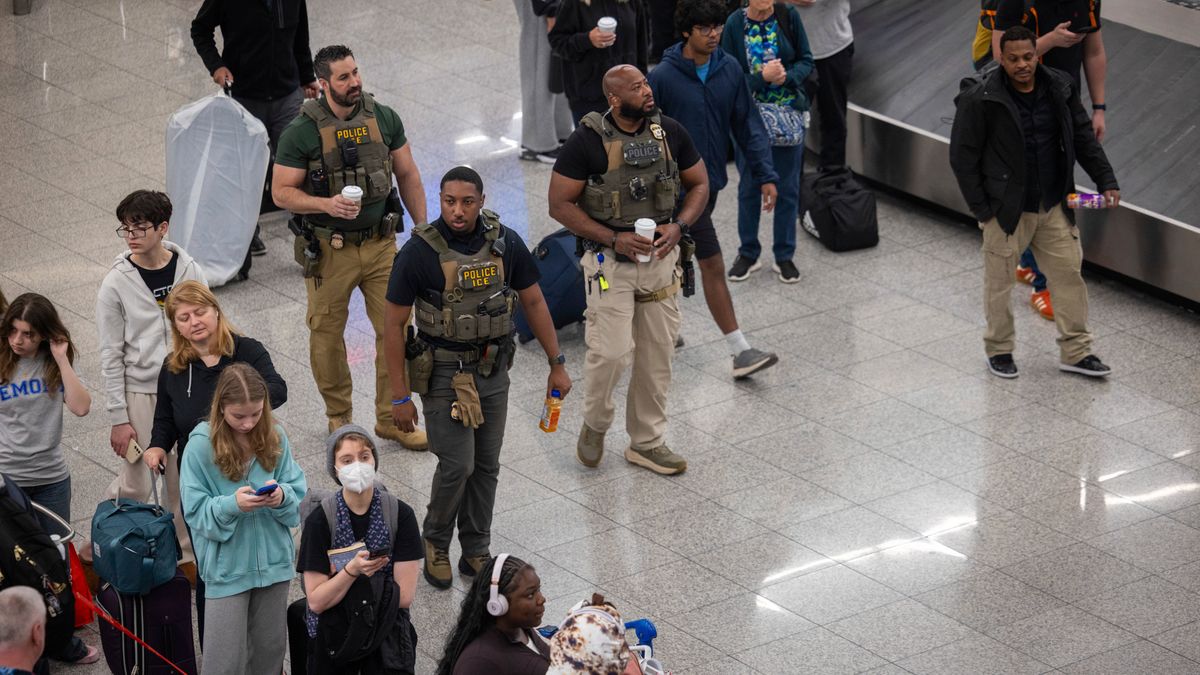
Facing mounting pressure from an ongoing budget dispute crippling federal agencies, President Donald Trump is now publicly considering deploying the National Guard to alleviate escalating chaos at U.S. airports. The extraordinary measure comes as travelers endure prolonged wait times at security checkpoints, exemplified by Atlanta’s Hartsfield-Jackson Airport. A critical funding shortfall within the Department of Homeland Security (DHS) is directly responsible for the operational disruptions, prompting Trump to explore sending “further support.” Speaking in Memphis, Tennessee, the Republican leader hinted at the potential deployment, though he refrained from offering specific details. This consideration underscores the severity of the situation and the administration’s desperation.
The current predicament stems from a weeks-long deadlock in Congress over the federal budget, primarily impacting the U.S. Department of Homeland Security. Democrats and Republicans remain at loggerheads regarding the allocation of funds, particularly for Immigration and Customs Enforcement (ICE). This contentious agency’s high-profile raids against migrants sparked widespread protests months ago. The controversy deepened following a tragic incident in January in Minnesota, where two U.S. citizens were fatally shot during operations conducted by DHS-affiliated officers. Democrats are now advocating for stricter regulations concerning ICE’s enforcement activities, further complicating efforts to reach a bipartisan agreement for crucial departmental funding.
The partial government shutdown has unleashed tangible consequences on daily American life, with air travel particularly hard-hit. The Department of Homeland Security’s mandate includes overseeing vital airport security controls, a responsibility now severely compromised by the funding crisis. Reports indicate a significant spike in sick leave among TSA control staff, exacerbating understaffing. The direct result is frustrating, hours-long queues at airport security gates, leading to missed flights and widespread public frustration. This operational breakdown has placed President Trump under considerable political pressure, prompting him to seek immediate remedies. Prior to contemplating the National Guard, the administration had already dispatched personnel from the controversial U.S. immigration agency, ICE, to airports to assist.
The potential deployment of the National Guard by presidential order raises significant legal and constitutional questions. Typically, control over the National Guard, a military reserve unit and integral part of the U.S. Armed Forces, resides with individual states. While the Guard is frequently activated for domestic emergencies such as natural disasters or civil unrest, a president’s authority to assume direct command is generally limited to specific, grave circumstances—like an ongoing or impending rebellion. It remains highly debatable whether the current situation of extended airport wait times, while inconvenient, meets the stringent criteria for President Trump to unilaterally federalize and dispatch National Guard soldiers to airports. The move could therefore face legal challenges and ignite a broader debate about presidential power.
