


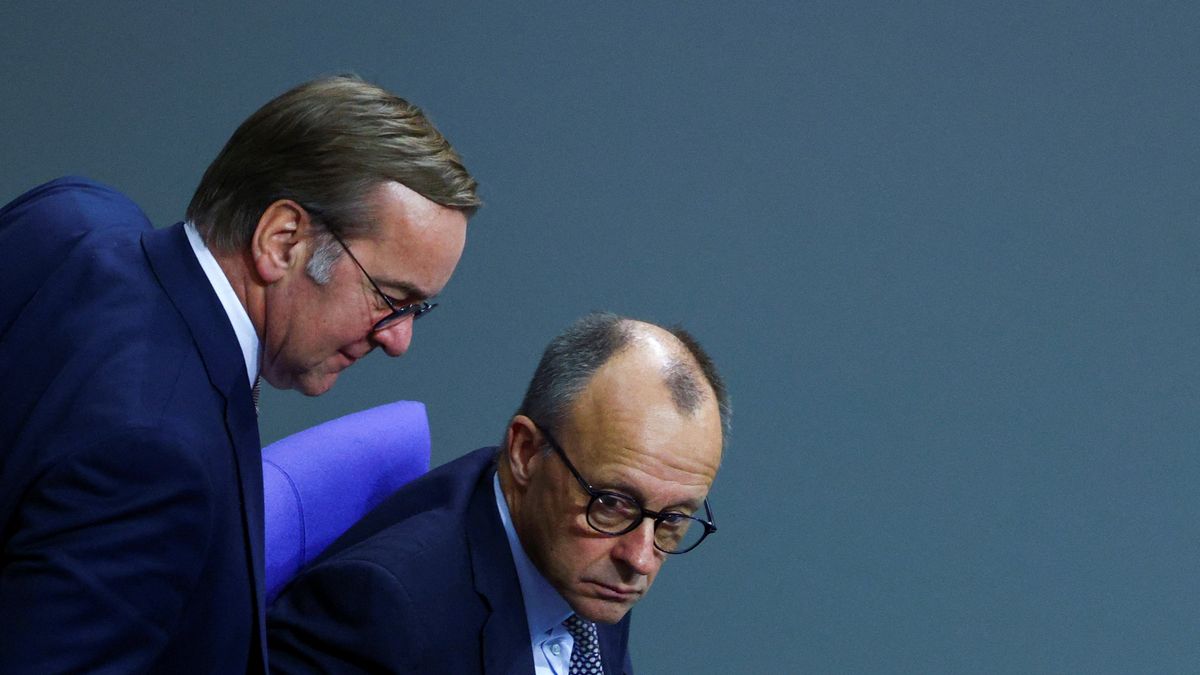
German Defense Minister Boris Pistorius (SPD) and Chancellor Friedrich Merz (CDU) have made a noteworthy joint declaration in the Bundestag regarding Germany’s approach to the situation surrounding Iran. Their explicit statement, “Deshalb wird sich Deutschland auch nicht militärisch einbringen,” clearly indicates that Germany will abstain from military involvement. This bipartisan consensus, coming from two prominent figures typically representing different political spectrums, signals a deliberate and unified foreign policy stance. The unexpected alignment on such a critical international issue, amidst ongoing geopolitical tensions involving Iran, immediately draws significant attention. This joint statement acts as a definitive demarcation of Germany’s strategic red lines, asserting a policy of non-intervention in a potentially volatile global region.
The most striking aspect of this declaration, as noted by observers, is its surprising echo of the foreign policy rhetoric once championed by former Chancellor Gerhard Schröder. The observation “Plötzlich klingen Friedrich Merz und Boris Pistorius wie einst Gerhard Schröder” highlights an intriguing historical parallel. Schröder famously adopted a non-interventionist stance, particularly concerning the Iraq War, which then differentiated Germany from key allies. For Merz and Pistorius to mirror this sentiment regarding Iran suggests a pragmatic, nationally aligned approach to foreign policy that prioritizes diplomatic and non-military solutions. This evocation of Schröder’s legacy implies a conscious decision to embrace a tradition of German foreign policy valuing restraint and avoidance of military entanglements in complex international conflicts.
Germany’s explicit commitment to non-military involvement in Iran carries significant implications for its domestic politics and international relations. In an era of increasing global instability, this stance positions Germany as a proponent of de-escalation and diplomatic engagement, rather than military intervention. It could be interpreted as a strategic move to preserve Germany’s role as a mediator and humanitarian actor. The decision also sends a clear signal to allies regarding Germany’s operational boundaries, potentially influencing collective security discussions. While some might view it as cautious, others may see it as a responsible commitment to preventing further militarization of an already tense geopolitical hotspot, aligning with broader European desires for regional stability.
This bipartisan declaration by Pistorius and Merz, transcending traditional party lines, underscores a deep-seated consensus within Germany’s political establishment on foreign policy principles in high-stakes situations. It suggests a shared understanding about the nation’s global role, especially concerning military engagement in sensitive regions like the Middle East. The reference to Schröder’s past actions adds historical continuity, implying this is not just a reactive statement but a reaffirmation of a core tenet of German foreign policy. The implications extend beyond the immediate Iran issue, signaling how Germany might approach future international crises, prioritizing non-military avenues and advocating for diplomacy as the primary tool. This unified front could strengthen Germany’s voice in multilateral fora, emphasizing a distinct European approach to global challenges.
