


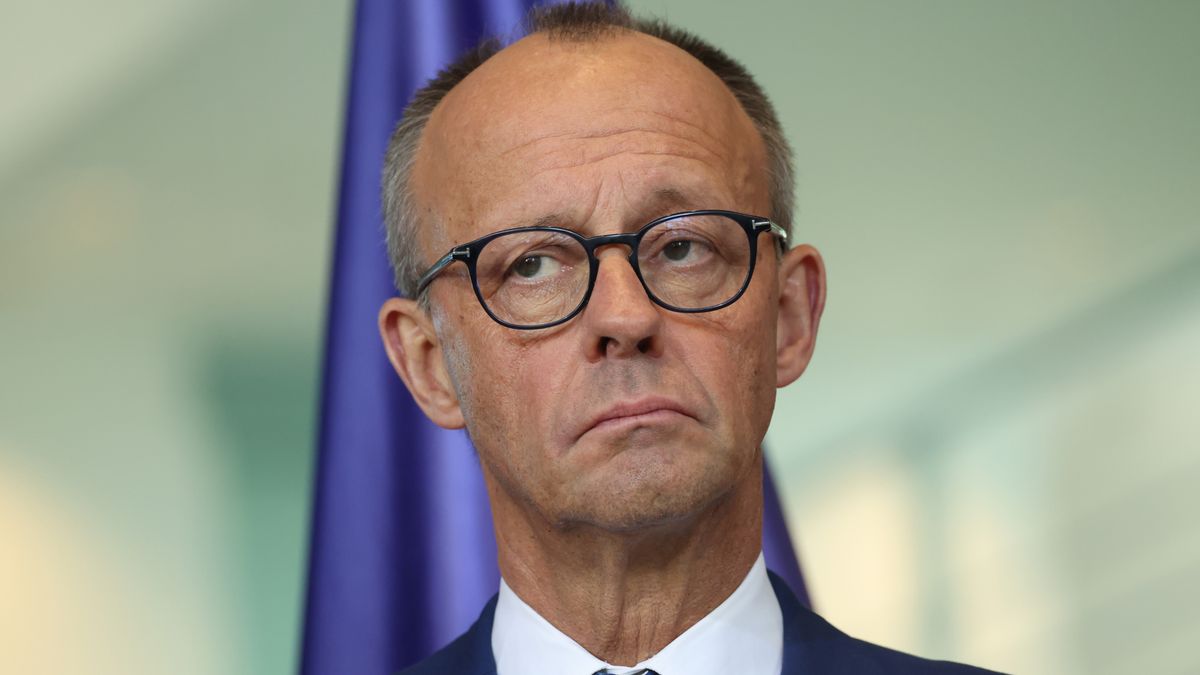
Friedrich Merz’s renewed encounter with Donald Trump in the Oval Office is overshadowed by the escalating Iran conflict. Much like his first visit, where Trump was distracted by a feud with Elon Musk, Merz again finds himself striving to be heard amidst a graver international crisis. While Merz aims to address customs disputes and advocate for Ukraine support, Trump’s focus is clearly on Iran. The German leader, having conceded Europe’s past reluctance to enforce fundamental interests militarily, remains on the periphery, a spectator to unfolding geopolitical drama. His ability to effectively place German and European concerns against the backdrop of a potential new war is severely challenged.
The specter of an “Irankrieg” (Iran War) looms, with Trump’s rhetoric oscillating between predictions of a swift four-week conflict and hints of a protracted engagement. The US Defense Department avoids setting an end date, emphasizing the operation’s early stage. Trump’s strategy appears to involve encouraging the Iranian populace to overthrow its regime, yet allies clarify that ensuring a democratic transition is “not his job.” This approach has drawn skepticism, with UK Prime Minister Keir Starmer expressing disbelief in “regime change from the air.” Alarmingly, Trump, who once vowed to keep America out of wars, now explicitly states, “I am not afraid of ground troops,” signaling a potentially significant escalation.
Domestically, the German Bundeswehr faces critical challenges, highlighted by the annual report of parliamentary ombudsman Henning Otte. His first report is expected to detail alarming incidents at the paratrooper barracks in Zweibrücken, where widespread reports of right-wing extremism, drug abuse, and sexual harassment have prompted direct involvement from Defense Minister Boris Pistorius. These revelations are particularly sensitive as the Bundeswehr seeks to attract young recruits through a new voluntary military service model. The Zweibrücken scandal casts a long shadow, acting as negative publicity and raising crucial questions about the effectiveness of measures against misconduct within the armed forces.
The confluence of these events marks a pivotal moment for German foreign and security policy. As Merz navigates the complex relationship with a potentially bellicose Trump, Germany and Europe are compelled to redefine their roles in an unstable global landscape. The Bundeswehr’s internal struggles, from disciplinary issues to recruitment challenges, directly impact Germany’s ambition to forge Europe’s strongest conventional army – a goal made urgent by Russia’s aggression in Ukraine. The narrative suggests Germany, while striving for influence, finds itself reacting to external crises and confronting internal deficiencies, with outcomes shaping its future international standing.