


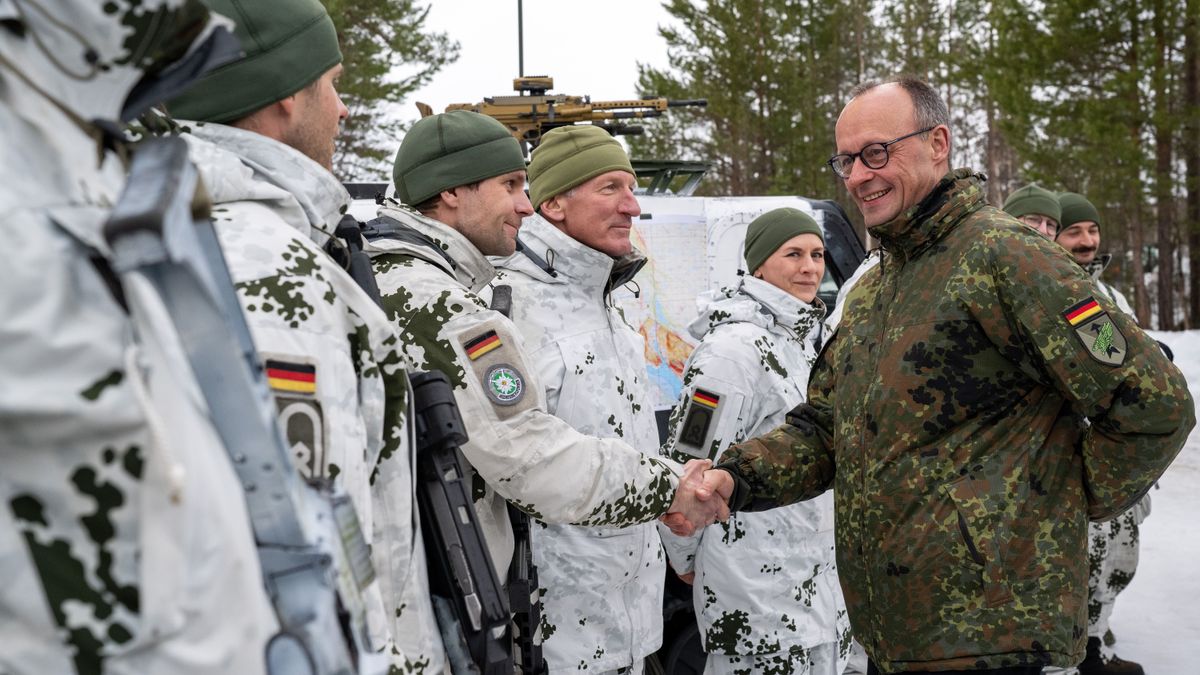
Friedrich Merz, an influential figure in German politics, recently undertook a significant visit to Norway, specifically to Bardufoss. This journey brought him face-to-face with Bundeswehr soldiers stationed in the critical Arctic region. His presence underscored Germany’s commitment to its defense alliances and its active role within NATO, especially concerning the security architecture of Northern Europe. The Arctic, increasingly a focal point for geopolitical interests, served as a poignant backdrop for discussions on defense readiness and strategic planning. Merz’s engagement with the troops highlighted the practical implications of Germany’s security policies and the challenges faced by its military personnel in extreme conditions, reinforcing the imperative for robust and adaptive defense strategies.
The phrase “Donald Trumps Ölspur im Schnee” provocatively points to the enduring influence of former US President Donald Trump’s energy policies and his broader approach to international relations on the Arctic landscape. This metaphorical “oil trail” suggests a complex web of economic, geopolitical, and environmental considerations, where resource extraction, particularly oil and gas, plays a significant role in shaping strategic decisions. Trump’s “America First” stance often challenged established alliances and global climate agreements, leaving a legacy that still impacts the strategic calculus of nations like Germany. For the Arctic, this translates into increased competition for resources, potential environmental risks, and a heightened need for European nations to define their own energy and security policies independent of fluctuating US priorities, especially with a potential return of Trump to power looming.
The Arctic is rapidly transforming into a new front for global competition, driven by climate change opening new shipping routes, and the vast reserves of natural resources. Nations bordering the region, alongside major powers, are vying for influence and access. Germany, though not an Arctic littoral state, holds substantial interests in the region, encompassing scientific research, climate protection, and security. Merz’s observation, “Es braucht einen überzeugenden Plan,” directly addresses this complex environment. It signifies an urgent call for a coherent, long-term strategy to navigate the geopolitical shifts, ensure energy security, and protect environmental integrity while maintaining a robust defense posture. This plan must integrate military readiness with diplomatic efforts and sustainable resource management, adapting to the dynamic challenges posed by the region’s evolving landscape.
Germany’s engagement in the Arctic, exemplified by Merz’s visit and the Bundeswehr’s presence, reflects a growing understanding of the region’s strategic importance to European and global security. The need for a “convincing plan” goes beyond mere military presence; it encompasses a multi-faceted approach that addresses energy independence, climate resilience, and international cooperation. As global powers increasingly look towards the Arctic, Germany, through its alliances and national initiatives, must contribute to stability and responsible development. The intricate interplay of defense requirements, economic interests, and environmental stewardship, set against the backdrop of historical and potential future geopolitical shifts, demands a forward-looking and resilient strategic framework from Berlin. This visit serves as a clear indicator of the country’s intent to play a proactive role in shaping the future of this vital frontier.
