


Donald Trump’s potential re-election brings a significant threat of new tariffs, specifically a 15% import duty, which is poised to severely impact Germany’s export-driven economy. This proposed measure could fundamentally alter the trade landscape between the United States and its European partners, with Germany, as Europe’s largest economy and a major exporter of goods like automobiles, machinery, and chemicals, facing the brunt of such a policy. The uncertainty surrounding these tariffs is already creating apprehension among businesses and policymakers, highlighting a potential shift towards protectionist trade practices that could disrupt established global supply chains and lead to higher costs for consumers and manufacturers alike.
The direct consequences for German exporters would be substantial. A 15% tariff would make German products significantly more expensive and less competitive in the crucial U.S. market, potentially leading to reduced sales, production cuts, and job losses within key industrial sectors. Beyond Germany, this move would challenge the European Union’s collective trade advantage with the United States. The initial information suggests that such a blanket tariff could erode the EU’s preferential status compared to other U.S. trading partners, forcing European goods to compete on an uneven playing field. This erosion of relative advantage is a critical concern, as it could prompt a re-evaluation of international trade agreements and foster a more fragmented global economic environment.
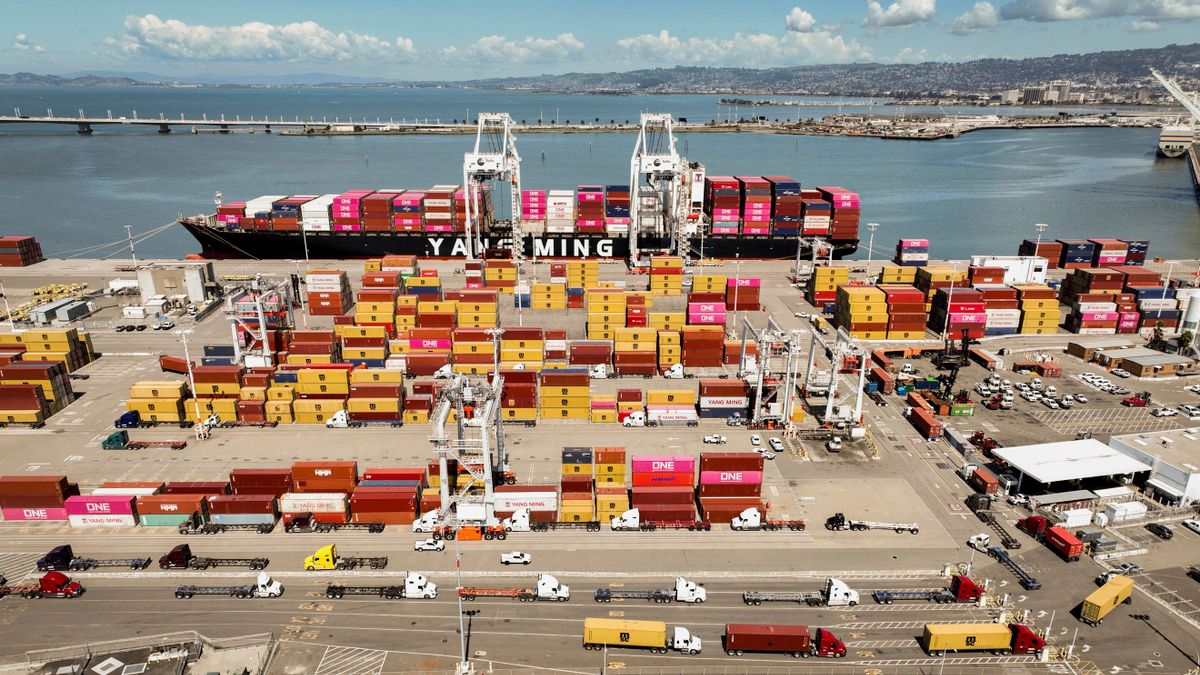
The prospect of new U.S. tariffs extends beyond immediate economic concerns; it carries significant geopolitical weight. Such a protectionist stance from Washington could strain transatlantic relations, which are already navigating complex issues ranging from security cooperation to climate change. For the EU, a strong, unified response would be necessary to mitigate the economic fallout and assert its trade interests. The situation observed with container ships in Oakland, symbolic of global trade flows, underscores how rapidly perceived advantages can shift, impacting not just specific goods but also the broader strategic alignment of economic blocs. Companies are bracing for increased volatility and are exploring strategies to diversify markets or localize production where feasible, though these are long-term adjustments.
Should these tariffs materialize, Germany and the EU would face a critical juncture. The options could range from diplomatic negotiations aimed at softening the blow, to potential retaliatory measures, or a strategic pivot towards strengthening trade ties with other global partners. The European Commission would likely be tasked with formulating a cohesive strategy to protect the single market and its members’ economic interests. The broader implication is a potential acceleration of global trade fragmentation, pushing nations to re-evaluate their reliance on single markets and explore more resilient, diversified trade networks. The coming months will be crucial in observing the political developments in the U.S. and the readiness of European leaders to address this looming economic challenge.
