


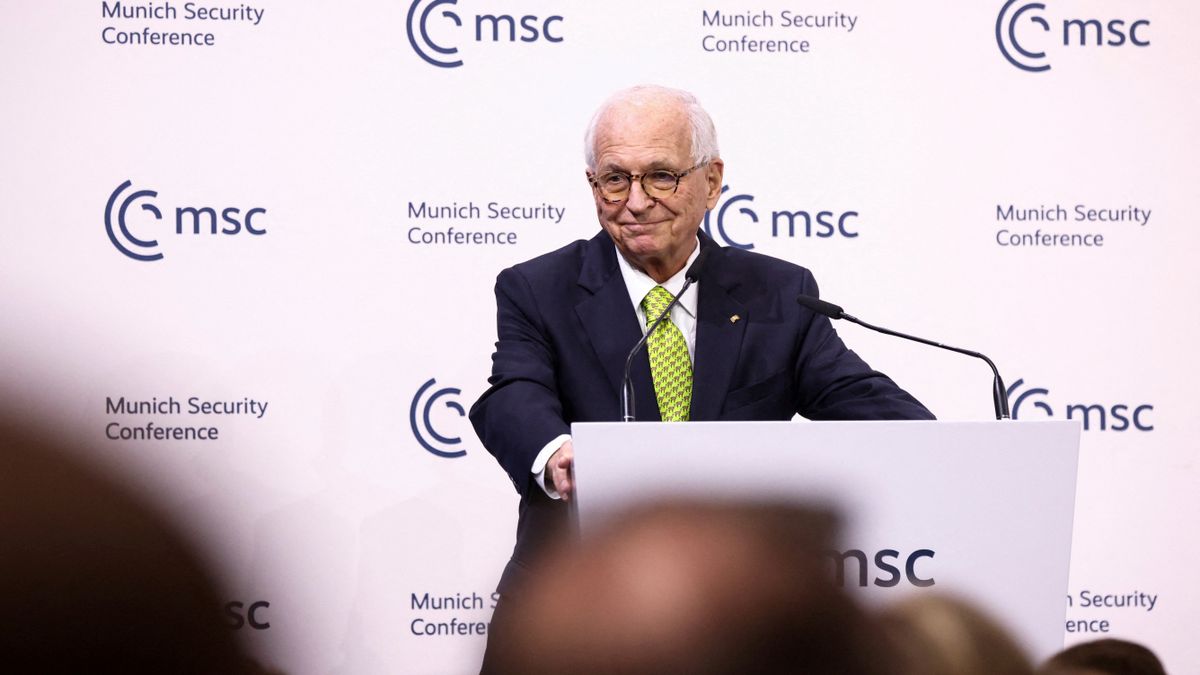
Wolfgang Ischinger will remain the Chairman of the Munich Security Conference (MSC) for the time being, a role he unexpectedly stepped back into. The veteran diplomat confirmed his continued leadership during his closing address at this year’s event, held at the Bayerischer Hof. This development comes as a surprise, as Jens Stoltenberg, the former NATO Secretary General, was originally slated to take over the helm. Ischinger’s continued tenure underscores the importance of steady leadership for one of the world’s most critical forums on international security policy, especially during a period of complex global challenges. The decision to keep Ischinger at the forefront ensures continuity and leverages his extensive experience and network within the diplomatic and security communities.
Jens Stoltenberg had been publicly announced as the successor to Christoph Heusgen, who is scheduled to chair the MSC until 2025. However, Stoltenberg made a last-minute decision to withdraw his commitment. The reason for his abrupt change of plans was a request from Norway’s Prime Minister, Jonas Gahr Støre, who asked Stoltenberg to assume the position of Finance Minister in his cabinet. This unexpected call to public service in his home country led to the leadership void at the MSC. Consequently, Ischinger, who previously led the conference with distinction between 2008 and 2022, stepped in to fill the gap, demonstrating his unwavering commitment to the institution he helped shape. His readiness to return to the leadership role highlights the MSC’s critical need for an experienced hand.
Addressing the situation directly, Ischinger commented on the delay in Stoltenberg’s succession. He stated that his “good friend Jens Stoltenberg” would only take on the chairmanship “when he believes that he can actually do that.” This statement from the current chief reflects an understanding of Stoltenberg’s current national obligations while also setting a flexible timeline for the eventual handover. Sources within the MSC leadership have indicated that they now anticipate Stoltenberg will assume the leadership of the prestigious conference at the next event, which is tentatively scheduled for early 2027. This revised timeline provides both Ischinger and Stoltenberg with the necessary flexibility to manage their respective commitments.
While his immediate succession has been postponed, Jens Stoltenberg has already taken steps to integrate himself into the MSC’s governance structure. In October, he officially joined the Foundation Board of the Security Conference, a move that signals his long-term dedication to the institution despite the delay in his direct leadership. Stoltenberg himself reiterated his intention to assume the chairmanship once “my public activity in Norway is completed.” However, he has not yet specified a concrete date for the conclusion of his governmental duties. This leaves a degree of uncertainty regarding the exact timing of the future leadership transition, though the MSC remains confident in Ischinger’s interim leadership and Stoltenberg’s eventual assumption of the role.